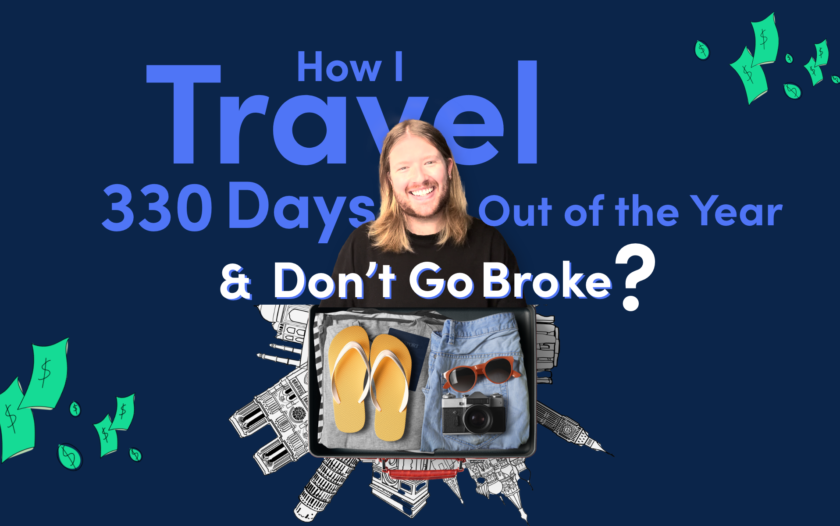
How I Travel Around the World Full-Time On My Freelance Salary






At a Glance
If you’re back in the office but wishing you were traveling, you’re not alone. Here’s how one person left it all behind to become a digital nomad and how to save money while doing it.
$787 billion
The global economic value contributed by the estimated 35 million digital nomads worldwide.


About me
My name is Harrison, and I am a freelance writer and digital nomad. I initially planned on starting this lifestyle following my graduation from the University of North Carolina at Chapel Hill in May 2020, but the world had different plans. I ended up selling off all my belongings in July 2021 with a one-way ticket to Italy. At the time, I didn’t have much of a plan other than wanting to see the world. I didn’t have a job and got through the first few months of traveling off savings and the money I made from selling everything I owned before leaving.
In January 2021, I decided that I wanted to make writing a career, and now I work with various brands to create content related to travel and personal finance. My byline has appeared in USA Today Blueprint, Conde Nast Traveler, and more. I’ve been working with Credello for a little over a year now, so I am excited to share my story and explain how I can make this possible.
Planning and budgeting
You don’t need a trust fund to travel full-time. You just need to be creative. When you’re constantly traveling, you are much more flexible around dates, locations, and timing. I strongly prefer summer over winter, so I’m willing to pay elevated prices to visit places when they’re warm. If this isn’t the case, you can travel around the world for a fraction of the cost during off-peak times.
I try not to focus too heavily on developing a line-item budget. My expenses vary wildly depending on where I am, so I am more focused on how much I have coming in versus going out and ensuring that number is always positive. If I have an expensive month, I can take on more work to offset that change. My salary depends wholly on what I accomplish, so I can dictate how much I make.
That said, I am very focused on experiences rather than tangible objects. The majority of my spending goes towards doing things rather than shopping. I’ll spend $70 on a mezcal tasting in Mexico without a second thought, but I will think long and hard before I purchase a $25 shirt.
That said, I am very focused on experiences rather than tangible objects. The majority of my spending goes towards doing things rather than shopping. I’ll spend $70 on a mezcal tasting in Mexico without a second thought, but I will think long and hard before I purchase a $25 shirt.
My top financial/trip planning resources
My favorite travel resource is Google Flights. I often pick my next destination by seeing where it is the cheapest to fly from where I currently am. You can type in your departure airport and then select search without typing in an arrival airport, and it will show you prices for going anywhere in the world.
1. Credit Cards
Credit cards should be your best friend if you want to travel full-time. Points and miles can save you thousands of dollars and elevate your travel experience. I currently have seven credit cards, but I’m always looking for my next one. These cards allow me to enjoy airport lounges before my flight, reimburse me for Global Entry every four and a half years, give me additional insurance and protections for trip interruptions or lost bags, and earn towards future travel. If you use a debit card for any purchase other than an ATM, you’re leaving money on the table. Speaking of ATM purchases, if you open a Charles Schwab checking account, they will reimburse you all ATM fees worldwide, which saves a ton of money throughout the year.
2. Foreign earned income exemption
Another great resource that many nomads, including myself, take advantage of is the Foreign Earned Income Exemption. In simple terms, it says that if you are physically located outside of the U.S. for 330 days or more out of the year, you are not liable for income taxes up to a certain threshold in that year. For tax year 2023, the threshold is $120,000. This can save remote workers thousands of dollars when it comes time to file taxes next year. Note that if you are self-employed, there is no deduction for self-employment tax, so you are still liable for all 15.3% whether you are in the country or not.
There are also plenty of budgeting apps out there to track your spending. I personally use Mint and have for years, as I like its visual aspect. Finally, I obviously couldn’t live this lifestyle without clients like Credello, who regularly send me work.
3. Building a career around travel
I started my career while traveling full-time. This is typically not how most nomads do things, but it worked for me. My creativity and eagerness to work reached unprecedented levels while traveling, so I figured out a way to keep it going. Since I work in the travel and finance field, moving around allows me to find new ideas for stories to pitch to editors. I can develop my business while traveling much more than I would if I was living back home.
Maybe you are planning to be a temporary digital nomad, or you just need a little vacation. Whatever it is, you have options for financing your trip.
Find and compare the best loan options.
 Use the filters below to refine your search


 10 results that match your needs






 6 min